
















 English (US)
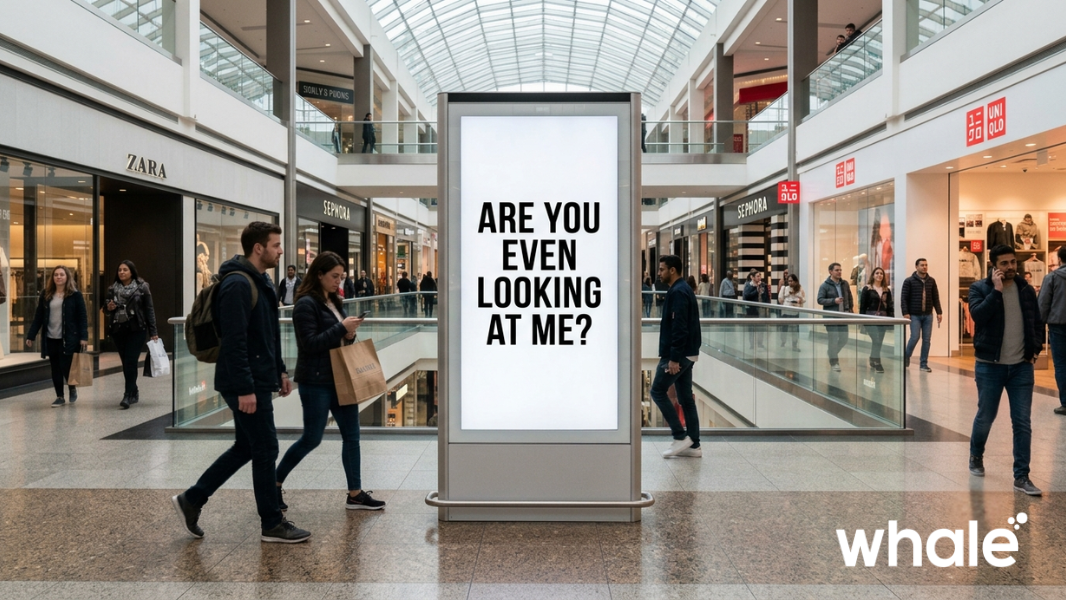
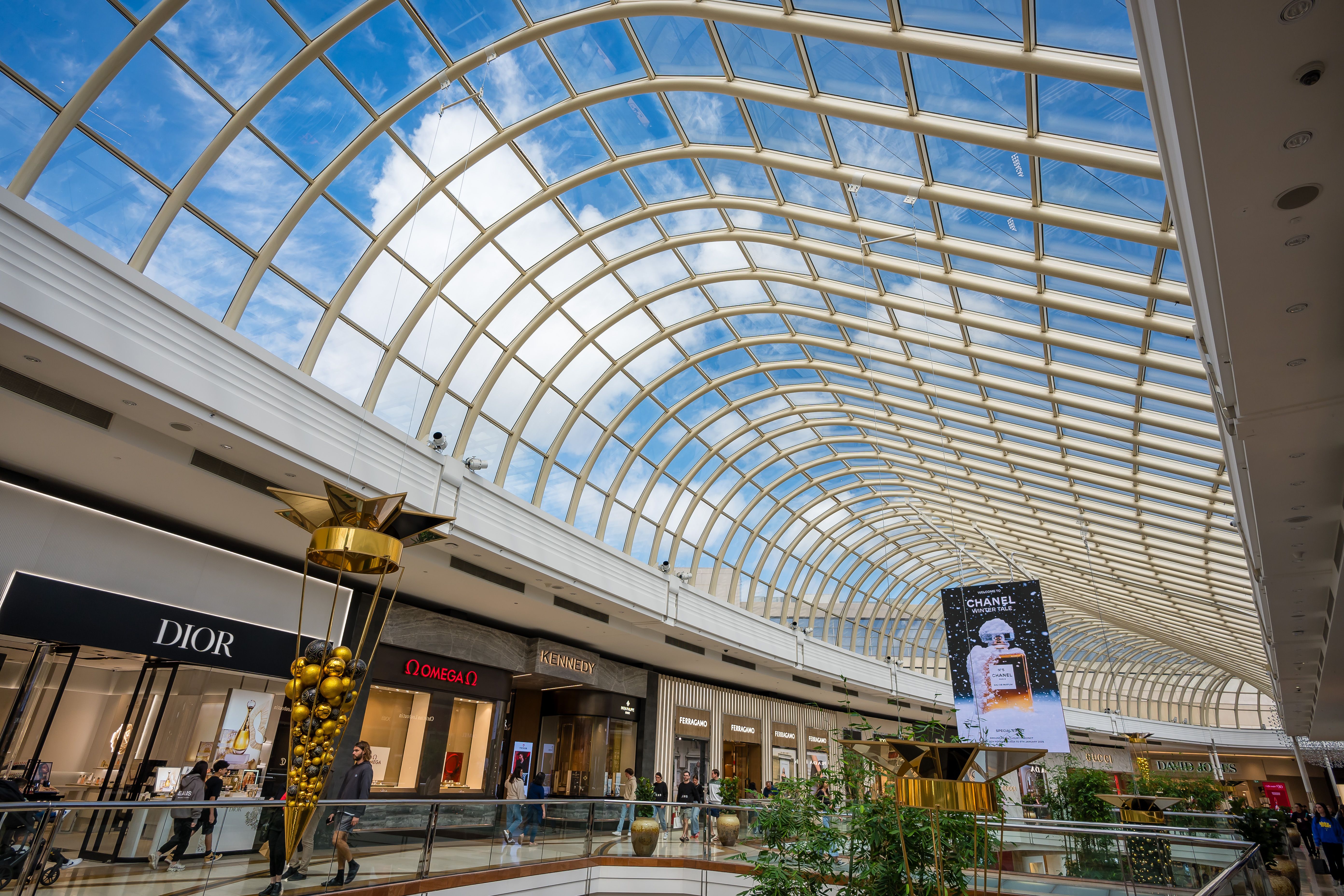
There's a banner hanging in the atrium of a mall near you. Maybe it's for a watch brand, or an airline, or a streaming service. It's been there for three months. It will probably be there for three more.
In that time, tens of thousands of people will walk underneath it. A handful will glance up. Almost none will remember it by the time they reach their car.
Somebody is still paying for that banner. Every month, an invoice goes out, and somebody approves it, and the ad stays exactly where it is — unmeasured, unexamined, and almost certainly unseen.
Call it a ghost ad. It's technically there. It is doing, as far as anyone can prove, almost nothing.
The scale of the problem is bigger than one banner
Out-of-home advertising isn't a fringe category. In the U.S. alone, OOH ad revenue hit a record $9.46 billion in 2025 — its 19th consecutive quarter of growth, according to the Out of Home Advertising Association of America (OAAA). Digital out-of-home, the screens and digital billboards layered on top of traditional placements, grew even faster: spending rose 9.3% to $4.9 billion in 2025 and is projected to reach $5.3 billion in 2026, while traditional formats are expected to bring in another $7.6 billion.
That's billions of dollars flowing into physical space every year. And yet, as Marketing Dive put it bluntly, out-of-home is "one of the few remaining channels where large budgets are routinely deployed without causal measurement." Standard attribution tools are built around clicks. A banner in a mall doesn't produce a click. So the spend goes out, the banner goes up, and the question that matters most — did this actually do anything — mostly goes unanswered.
It's not that physical space doesn't work. It's that almost nobody can prove which parts of it do.
Whoever is selling you that banner has just as much at stake as you do
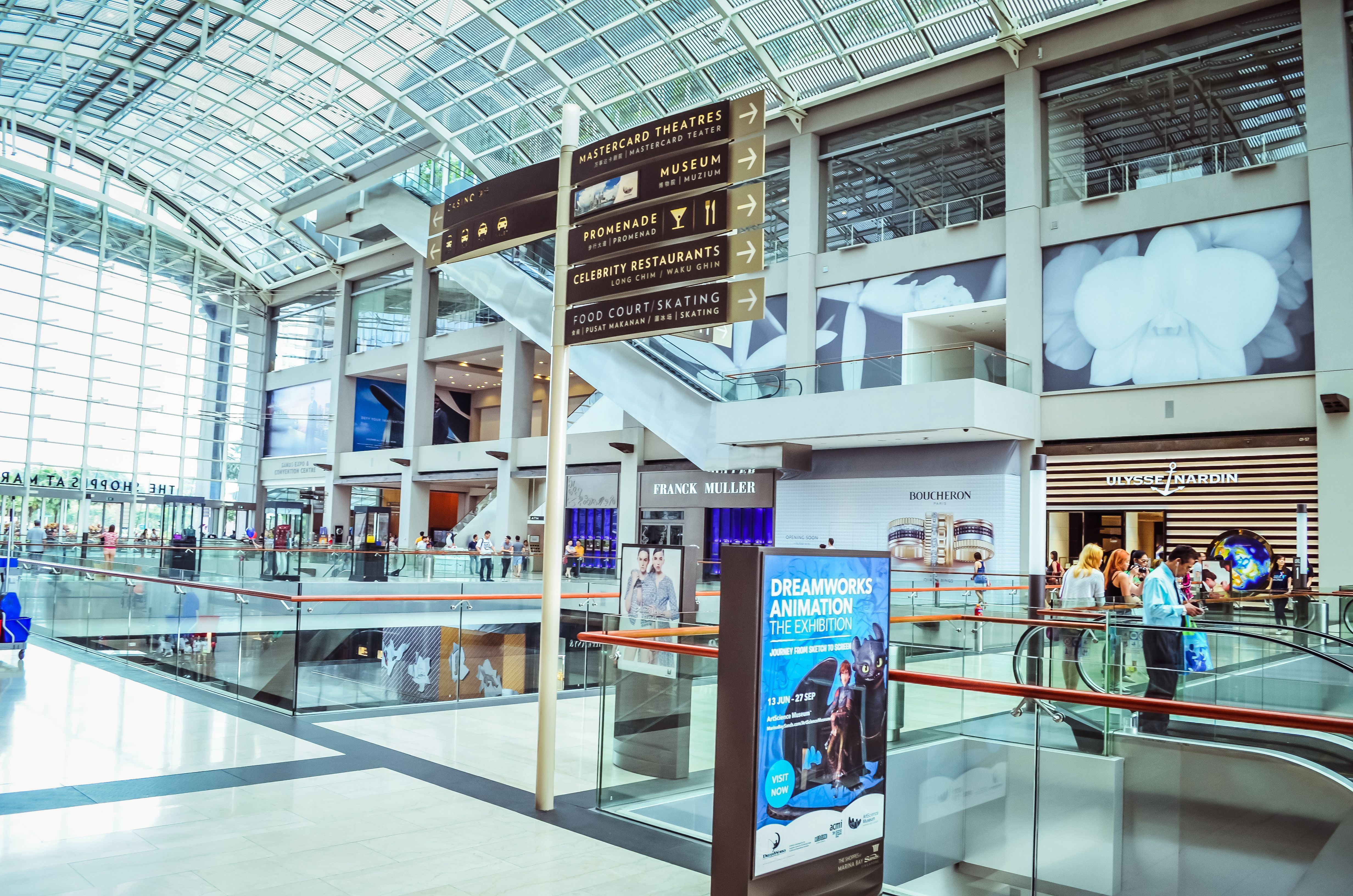
It's worth naming who's actually on the other side of that invoice. Out-of-home ad space is sold by a fairly concentrated group of media owners — Lamar Advertising holds roughly 25% of U.S. OOH revenue, OUTFRONT Media another 21%, and Clear Channel Outdoor 17%, with JCDecaux and a long tail of independents splitting the rest. Layer on the mall and shopping-center landlords who lease that atrium space to begin with (or run their own ad programs directly), and increasingly the retailers who now sell ad space inside their own stores, and you get an entire revenue chain that depends on brands continuing to write that check without asking too many hard questions. If buyers ever lose confidence in unmeasured inventory and pull back, that's not only a brand-side budget problem — it's lost revenue for everyone currently selling the space. Which is exactly why better measurement should be something sellers are pushing for too, not just something buyers are demanding of them.
And if you're the one who has to defend the line item, this gets personal fast
If you're the marketer who actually owns this spend, the stakes are less abstract than "is this ad working" and more like "can I explain this in the next budget review." At some point — usually right before the quarterly review, or whenever finance goes looking for places to cut — someone is going to ask you to justify the line item, and "it's always been part of the media plan" stops being a good enough answer. Without a real attribution story, OOH and in-store placements are often the first thing flagged when budgets tighten, not because the channel doesn't work, but because it's the easiest line to point at when you can't bring a number to the table. The teams that keep winning that conversation aren't necessarily spending the most — they're the ones walking into the review with a foot-traffic or dwell-time chart instead of just a renewal form.
Walk twenty feet further into the store, and the story gets stranger
Step past the atrium and into the store itself, and the stakes get even higher — because this is actually where the decisions happen. According to POPAI's Shopper Engagement Study, 76% of purchase decisions are made in-store, up from 70% in 1995. Retailers that get the in-store experience right see real results: stores using point-of-purchase displays have recorded sales increases of up to 140% over those that don't, and in-store displays carry a 10% higher recall rate than digital ads, according to POPAI data cited by Forbes.
So the in-store environment is powerful. The problem is that most of what retailers put into it doesn't get noticed at all. One eye-tracking study spanning eight retail chains found that while 85% of shoppers engaged with core product displays, other point-of-sale materials — like selector guides — were considered by only 10–15% of shoppers. Shelf position matters enormously: eye-level shelving captures the most visual attention, around 17% in total, while top shelves are almost completely ignored. In some cases, shoppers were observed actively avoiding signage stuck to freezer doors just to see the products behind it.
Put the mall banner and the in-store display side by side, and you get the same uncomfortable picture twice. Brands are spending real money on physical spaces designed to capture attention, and in both cases, most of that spend is happening on faith.
We already know attention is buyable. We just don't know where
Here's what makes this more frustrating than it needs to be: the data that does exist tells us attention is very much a solvable problem. OAAA-backed research found that 73% of consumers view digital out-of-home ads favorably, and 76% took some action after seeing one. Motion-based digital creative can boost attention by as much as 400% compared to static images, and digital billboards draw roughly 400% more views than their static counterparts.
In other words, we have good evidence that some placements, formats, and locations dramatically outperform others. What's missing isn't the concept of "better advertising." What's missing is the ability to know, in any specific mall, any specific store, any specific shelf, which version of the ad you're actually running — the one people notice, or the ghost.
So how does anyone actually check today?
To be fair, it's not a total black box. In the U.S., the industry's main measurement currency is Geopath, a nonprofit that estimates impressions, reach, frequency, and audience demographics for OOH placements by combining anonymized mobile location data with traffic and transit counts from transportation departments. It's a real methodology, and a meaningful upgrade from pure guesswork. But it's still modeling who probably walked past a panel — not measuring who actually looked up, slowed down, or remembered what they saw. Inside the store, the closest things to a feedback loop are point-of-sale data (which tells you what sold, but not why) and post-campaign brand-lift surveys (which tell you what people recall weeks later, but not what actually caught their eye in the aisle). All of it is a reasonable proxy. None of it is the same as watching what happened.
A quiet shift is already underway
This is part of why an entire category of spatial intelligence technology has emerged over the last few years — software that uses computer vision and sensor data to read what's actually happening in physical spaces, the way analytics dashboards have always read what happens on a website. It's a fast-growing space: the market for computer vision in retail alone is projected to grow from roughly $4.2 billion in 2024 to $29.3 billion by 2033. At Whale, this is the layer we build — spatial intelligence that lets retail and brand teams see foot traffic, dwell time, and engagement inside their own stores with the same clarity they already expect from digital channels. We don't think the answer is spending less on physical space. We think the answer is finally being able to see it.
Which brings us back to the banner
It's not that the banner in the mall atrium is a bad idea. It's that nobody walking past it — and nobody paying for it — actually knows whether it's working. For decades, that's just been the cost of doing business in physical space: you pay, you hope, you renew the contract next quarter because that's what you did last quarter.
That assumption is what's starting to change. The mall banner doesn't have to stay a ghost. It just has to become something somebody can finally measure.
Sources
Out of Home Advertising Revenue Reaches Record $9.46 Billion — OAAA
OOH advertising statistics & trends marketers need to know — StackAdapt
Solving OOH's attribution problem takes on new urgency amid a renaissance — Marketing Dive
76% of Buying Decisions Are Made At The Point of Purchase — POPAI
10 Amazing Stats Showing the Power of Retail Displays — Merit Display
Eye-tracking insights for enhancing shopper marketing — The Marketing Society
Digital Out-of-Home (DOOH) Advertising Guide 2025 — Placebased
OOH Advertising Trends & Stats Over Time (2019-2025) — TastyAd
Store Analytics Computer Vision Market Research Report 2033 — Dataintelo
Lamar Holds Biggest OOH Market Share Among US Media Companies — sixteen-nine.net
- The $9 Billion OOH Attribution Gap: Why Physical Ad Spend Still Runs on Faith
- Check Out Whale's Open Space, Where AI Meets the "Lead to Win" Spirit
- Whale Secures $60 Million to Expand its Enterprise AI Suite Globally
- Energy, Passion, and the Future of AI
- Introducing Echo
- 3 Ways to Improve Conversion Rate for the Automotive Industry
- How SpaceSight Works in Standardizing and Improving Operational Efficiency for Car Workshop
- How GIORGIO ARMANI Redesigned Success Metrics Across Multiple Stores
- How GXG Leveraged Footfall Analytics for Smarter Employee Management
- From Browsing to Buying: Use SpaceSight to Optimize Sales Through Product Placement
- How Supermarket Chains Improve Inspection Efficiency with Smart Technology
- Four Management Practices to Ensure Food Safety in Your Kitchen
- How SpaceSight Improved Inspection Efficiency for Chain Restaurants
- Build Consistent Customer Dining Experience with SpaceSight Onsite Inspection
- How to Use Footfall Analytics to Improve Customer Service
- Navigating the Future of Retail with AI with OPPO Indonesia
- Why Retail Managers Need Inspection Software for Store Management












-
 Schedule a demoProfessional consultants will provide a brief explanation lasting at least 20 minutes to help you evaluate and use Weve products more efficiently. Please leave your contact information, and we will contact you as soon as possible to schedule a demonstration time.
 -
 Scan to followStay updated with the latest news anytime, anywhere
 Whale Instagram Page
 Whale Linkedin Page
 -
 Customer Service CenterProvide one-on-one consultation and technical support for products and solutions
-
 Back to top